

The SugarAI ESG addon provides a collection of modules for organizing and reporting sustainability data, turning ESG data disclosure into a transparent and audit-ready process for companies using SugarAI.

|
|

|
|

Key Features
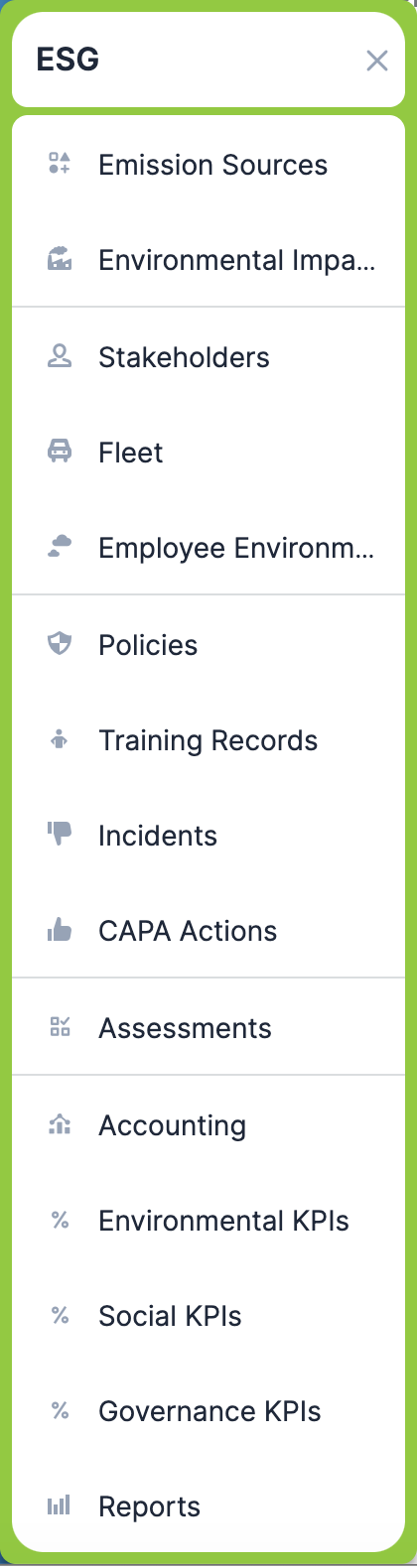
- Integrated emissions source database: The built-in ADEME database contains emission factors and uncertainty indicators from various sources, serving as the foundation for emission-related calculations and transparent reporting.
- Stakeholder relationships: Individuals involved in ESG processes — including Sugar users, employees, or contacts — are stored in a unified registry together with ESG-specific data related to them. Based on this registry, the ESG module establishes technical relationships between responsible parties and individual sustainability tasks, assessments, and incidents.
- Event and incident logging: Enables the categorization of environmental, social, and governance incidents by type and severity, while directly linking the required corrective actions to them on a data relationship level.
- Policy and document management: Enables the registration of corporate ESG policies, guidelines, and their validity cycles. Ensures that the regulatory environment valid at a given point in time remains traceable for every reporting period.
- Corrective and preventive actions (CAPA): A dedicated workflow management unit for eliminating identified deficiencies. Tracks deadlines, responsible parties, and the review of the effectiveness of implemented actions. SugarAI Tasks can also be assigned to individual actions.
- Training and competency records: Enables the organization of sustainability-related training data (dates, participants, topics). The technical structure allows trainings to be linked with relevant corporate policies, demonstrating the development of ESG awareness within the organization.
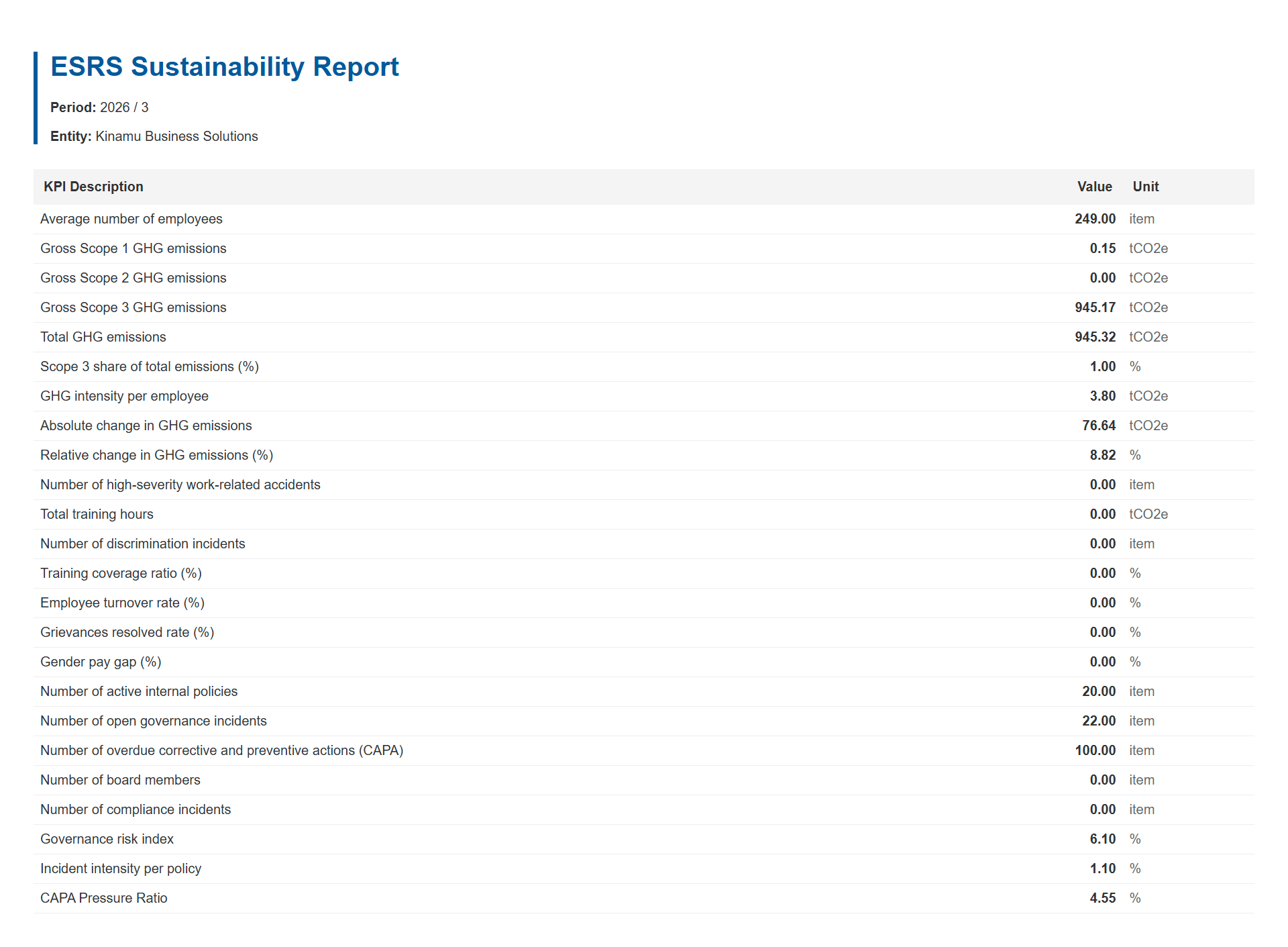
- ESRS and XBRL data preparation: The data structure is suitable for preparing reports compliant with European Sustainability Reporting Standards (ESRS), supporting standardized reporting and the fulfillment of XBRL publication obligations.
- Structuring assessments and questionnaires: Provides a framework for conducting sustainability assessments. Individual questions can be weighted, allowing fine-tuning of scoring methodologies and ensuring more reliable results during supplier or internal audits.
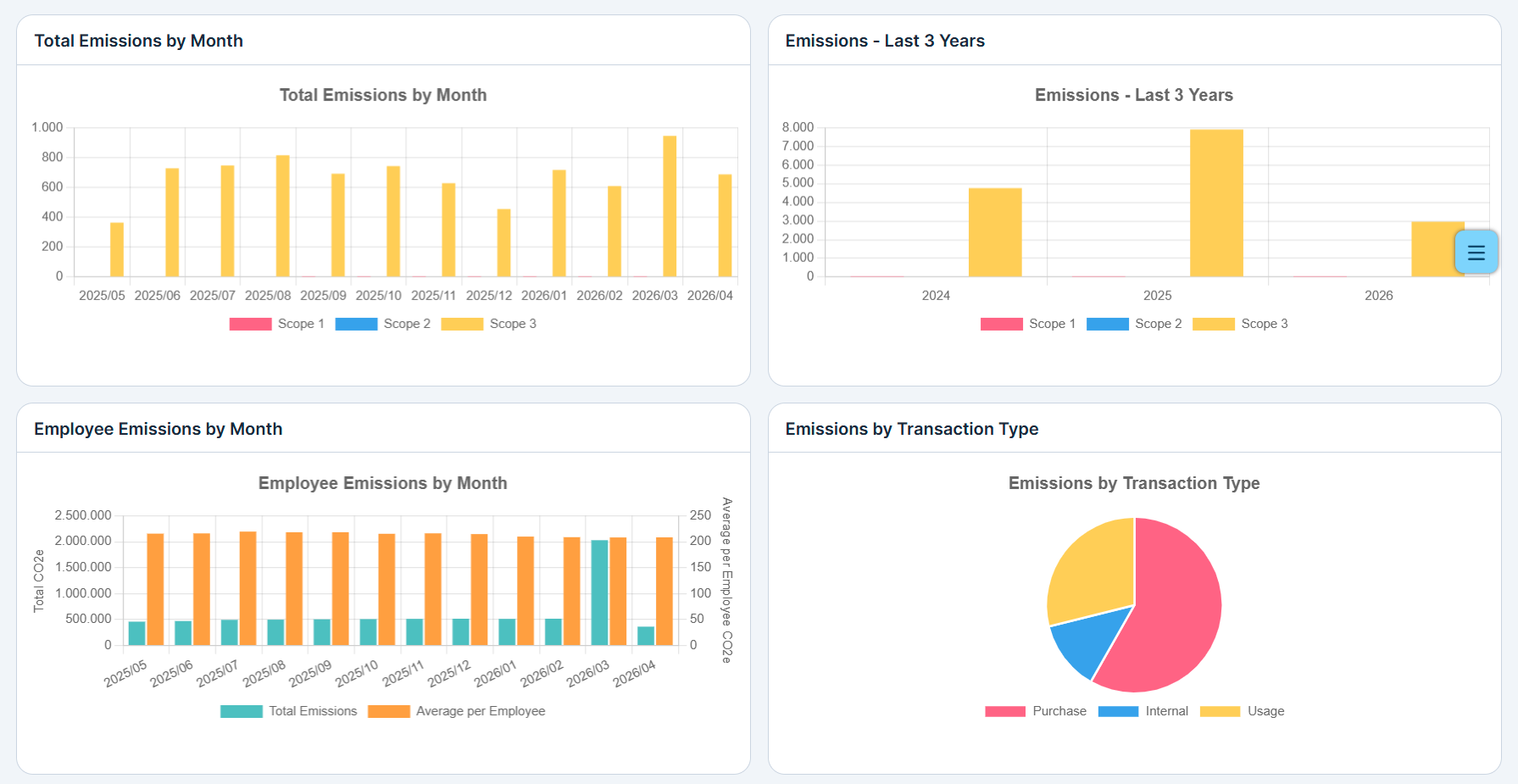
- Fleet and mobility data management: Detailed organization of data related to employee mobility and company vehicles. The module is capable of generating monthly per-capita emission indicators and environmental impact analyses from raw data.
- Environmental impact (emissions) records: A dedicated unit for recording specific emission events, linking consumption data with emission sources. Supports the parallel handling of spend-based and quantity-based data for precise carbon footprint calculations.
- Automatic generation of emission metrics from sales activities: The addon allows Sugar product catalog items to be handled as emission sources. As a result, emissions generated during sales processes (purchasing and selling) are automatically administered as scope 3 and scope 1 items.
- Aggregation of financial indicators: On a monthly basis, the module consolidates economically relevant ESG-related data such as revenue or gender-based salary data. This structured data repository serves as the basis for calculating ESG-related financial indicators and KPIs.
- Aggregated ESG KPIs: Based on recorded data, the system aggregates environmental, social, and governance metrics on a monthly basis. It enables trend monitoring, analysis of distribution across scopes, and reporting of various efficiency ratios (e.g. intensity indicators).
With the KINAMU ESG addon, companies using SugarAI that are subject to ESG reporting obligations gain access to an essential toolkit that simplifies sustainability data disclosure.
View Pricing
Backed by our Tried & Tested,
30-Day Money Back Guarantee.